How to Repair Soffit on a House: Step-by-Step Guide for Homeowners
How to Repair Soffit on a House: Step-by-Step Guide for Homeowners explains how to replace damaged panels, repair wood rot, and stop moisture problems. It also shows when DIY work is suitable and when professional help is safer.
How to Repair Soffit on a House: Step-by-Step Guide for Homeowners
A damaged soffit can let moisture, insects, and air reach the roof overhang and attic. This soffit repair guide for homeowners explains how to inspect the problem, remove damaged material, install a replacement, and decide whether DIY soffit repair is safe. A soffit problem often begins above the visible damage—with a leaking gutter, failed flashing, or roof-edge issue.
What Is a Soffit, and Why Does It Matter?
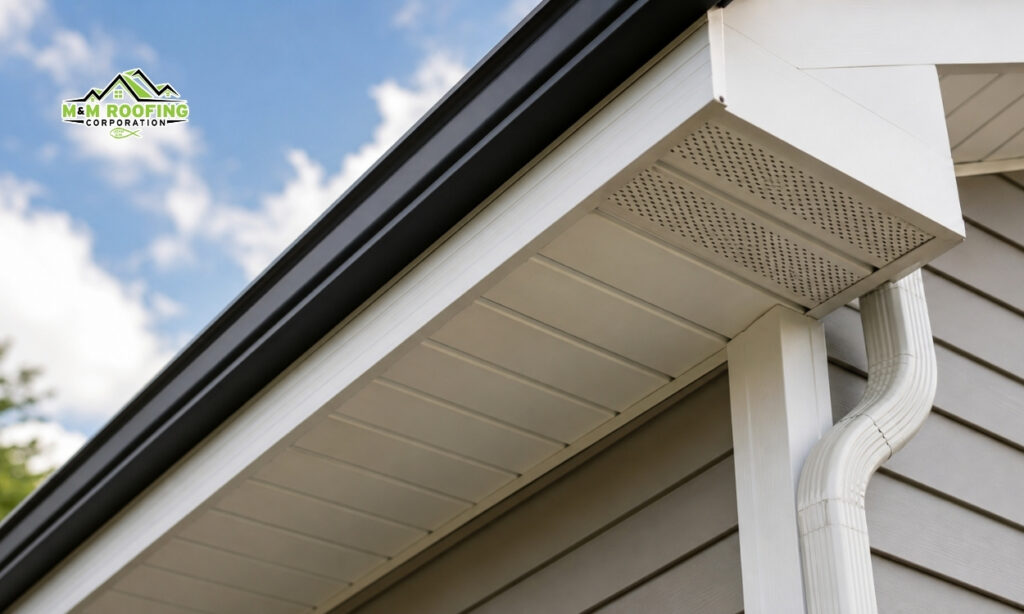
The soffit is the finished surface underneath the roof overhang. It protects rafters, closes gaps where pests may enter, and often provides intake ventilation for the attic.
Warning signs include peeling paint, soft wood, holes, stains, loose panels, sagging sections, and pest activity. Before repairing damaged soffit boards, correct the source of water. Otherwise, the new material may fail again.
For recurring damage, M&M Roofing Corp offers professional soffit and fascia repair in New Jersey.
Materials Needed for Soffit Replacement
Most projects require:
- Matching wood, vinyl, or aluminum soffit
- Exterior screws or corrosion-resistant nails
- Pry bar, drill, hammer, and utility knife
- Tape measure, square, saw, or tin snips
- Exterior caulk, primer, and paint
- Ladder, gloves, protection, and dust mask
- Replacement vent panels, when applicable
Match the existing thickness, profile, and ventilation pattern. Never cover functional soffit vents.
Step-by-Step Soffit Replacement
1. Inspect the Roof Edge
Check the fascia, gutters, drip edge, shingles, and flashing. Learning how to repair a roof overhang underneath starts with stopping water above it. Repair any active roof or gutter leak first.
2. Mark the Damaged Section
Probe wood with a screwdriver to find solid material. Rot often extends beyond the visible stain. Mark a section that ends at framing or secure support points.
When fixing sagging roof soffit, determine whether the panel is simply loose or the supporting wood has deteriorated.
3. Remove the Existing Soffit
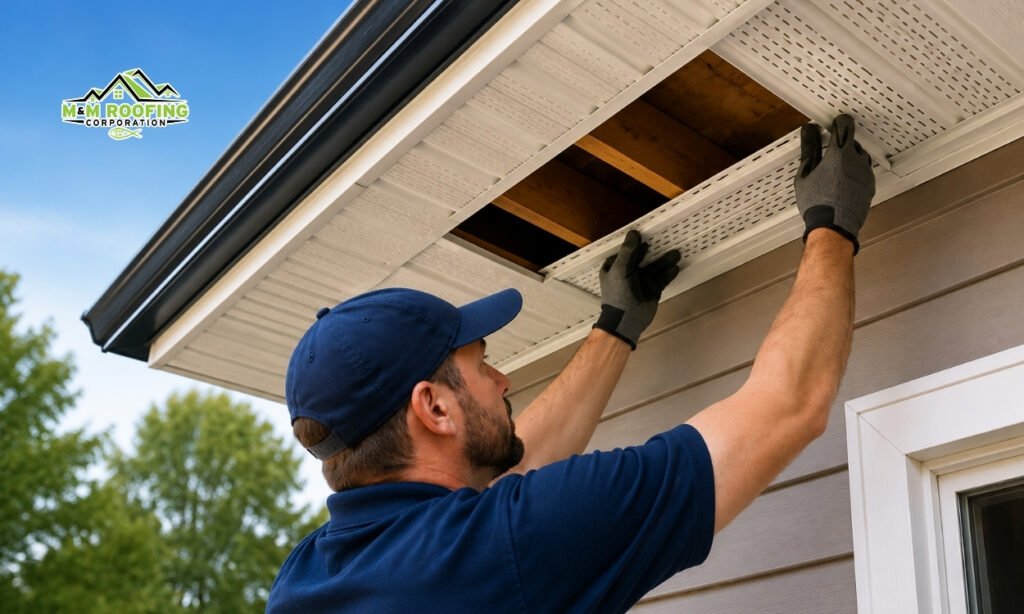
Remove trim and fasteners with a pry bar. Vinyl and aluminum panels usually slide or unlock from receiving channels. Watch for sharp edges, nests, mold, and exposed wiring.
If rafters or structural framing are soft or extensively rotted, call a professional.
4. Repair Rotted Supporting Wood
To understand how to fix rotted wood soffit, remove weakened material until solid wood remains. Replace damaged blocking where necessary. Minor surface deterioration may accept an exterior wood consolidant, but structural rot should be replaced, not filled.
Allow damp framing to dry before closing the opening.
5. Cut and Install the Replacement
Measure and cut the new piece to fit. Prime all sides and cut edges of wood soffit before installation.
Secure the material to solid framing. Do not overtighten vinyl or aluminum because they expand and contract. Keep vented sections open. These principles also apply when learning how to replace exterior soffit and following soffit and fascia repair instructions.
6. Reinstall Trim and Finish
Replace the trim or receiving channels, then seal joints with paintable exterior caulk. Do not caulk ventilation openings. Paint wood soffit and confirm the new section sits straight and secure.
Easy Soffit Repair Methods by Material
How to Patch a Hole in Aluminum Soffit
A puncture can sometimes be covered with a matching aluminum patch and exterior-grade sealant. Larger holes usually require replacing the full panel. Keep patches flat and away from ventilation openings.
Fixing Loose Vinyl Soffit Panels
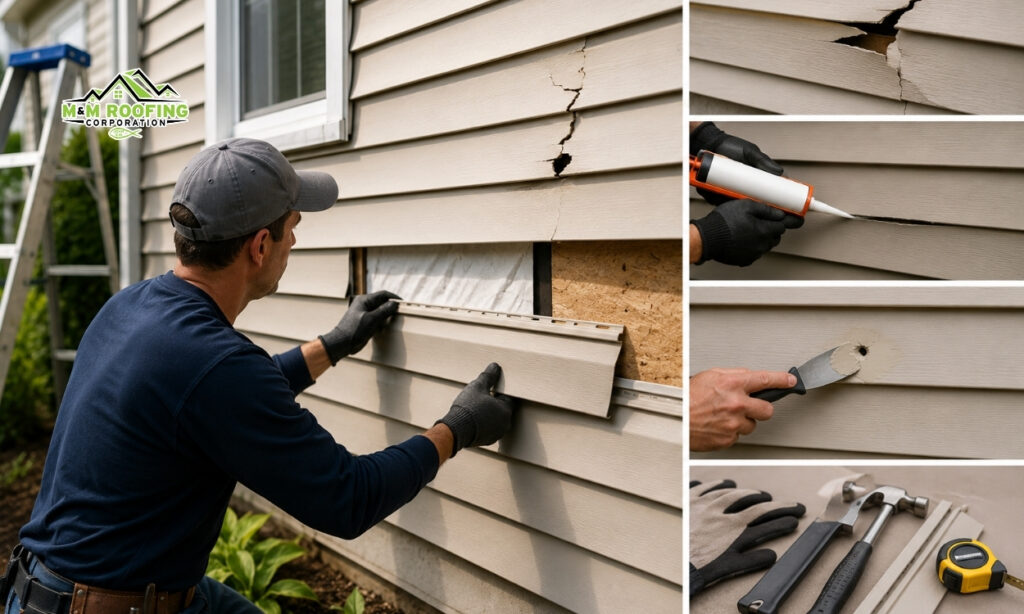
An undamaged panel may be placed back into its J-channel or receiving trim. Replace cracked panels or broken channels instead of gluing them. Adhesive can restrict movement and fail during New Jersey temperature changes.
How to Fix Water-Damaged Soffit
Stains may be cosmetic, but soft, swollen, or crumbling material should be removed. Trace the moisture to the roof edge, flashing, gutter, fascia, or attic ventilation. Replacing only the visible damage will not solve the cause.
When Is DIY Soffit Repair Appropriate?
DIY work may be reasonable when the damage affects one accessible board or panel, the framing is sound, and the homeowner can use a ladder and cutting tools safely.
Professional help is safer when the area is high, damage reaches the fascia or rafters, water is still entering, mold or pests are present, or wiring is nearby. A contractor can also preserve attic airflow and inspect for hidden deterioration.
M&M Roofing Corp is licensed and insured in New Jersey under #13VH10959700. Homeowners can request a soffit repair estimate in Scotch Plains and surrounding areas or explore the company’s residential roofing and exterior services.
Prevent Future Soffit Damage
Inspect soffits in spring and fall and after storms. Keep gutters clear, trim branches away from the roofline, and address peeling paint, loose panels, or openings early. Routine maintenance helps protect the roof overhang, attic ventilation, and exterior appearance.
Need help with your roof?
Reading a guide is helpful, but every home is different. Contact M&M Roofing Corp for roofing, gutters, siding or exterior service in New Jersey.