How to Replace Deck Stairs: Signs, Cost & Step-by-Step Guide
How to Replace Deck Stairs: Signs, Cost & Step-by-Step Guide explains when deck steps should be replaced, what affects the cost, and how the rebuilding process works from stringers to railings.
Learning how to replace deck stairs starts with deciding whether the existing staircase is still structurally safe. Loose treads, rotted stringers, unstable railings, and shifting connections can turn a small maintenance issue into a safety concern. This deck stair replacement guide explains the warning signs, typical costs, replacement process, and when a DIY deck stairs replacement makes sense versus hiring a professional.
Signs Deck Stairs Need Replacing
Deck stairs deteriorate gradually, so homeowners do not always notice the problem immediately. Common signs deck stairs need replacing include:
- Soft or spongy treads
- Cracked or split stringers
- Loose stair-to-deck connections
- Excessive movement when walking
- Rusted or missing structural fasteners
- Sagging steps
- Unstable railings
- Repeated repairs in the same area
The most serious signs of rotting deck stairs are wood that feels soft under pressure, dark deterioration around fasteners, crumbling edges, and decay where stringers contact the ground or landing.
If rot reaches the framing or several components are failing, professional deck repair and replacement services may be safer than continuing to patch individual pieces.
Deck Stair Repair vs Replacement
The decision depends on how much of the structure is affected.
A single damaged tread may be repairable when the stringers, connections, and railings remain sound. Replacement becomes more practical when multiple treads have deteriorated, stringers are cracked or rotted, or the entire stair assembly moves under load.
When deciding when to replace deck steps, consider the age of the stairs, extent of moisture damage, previous repairs, and condition of the deck framing where the staircase attaches.
Replacing wood deck steps without correcting deteriorated stringers underneath only hides the real problem.
Cost to Replace Deck Stairs
The cost to replace deck stairs varies considerably based on stair height, width, material, railings, landing work, and structural repairs.
For a relatively simple residential staircase, total replacement may fall in the low thousands of dollars. Larger elevated staircases, composite materials, custom railings, or extensive framing repairs can cost several thousand dollars more.
The average cost for new deck stairs depends on:
- Number of risers and treads
- Pressure-treated wood versus composite materials
- Number of stringers
- Railing and handrail requirements
- Demolition and disposal
- Landing construction
- Existing framing condition
- Site accessibility
The labor cost to build deck stairs also increases when custom cuts, complex railings, or structural reinforcement are required.
How to Rebuild Deck Stairs Step by Step
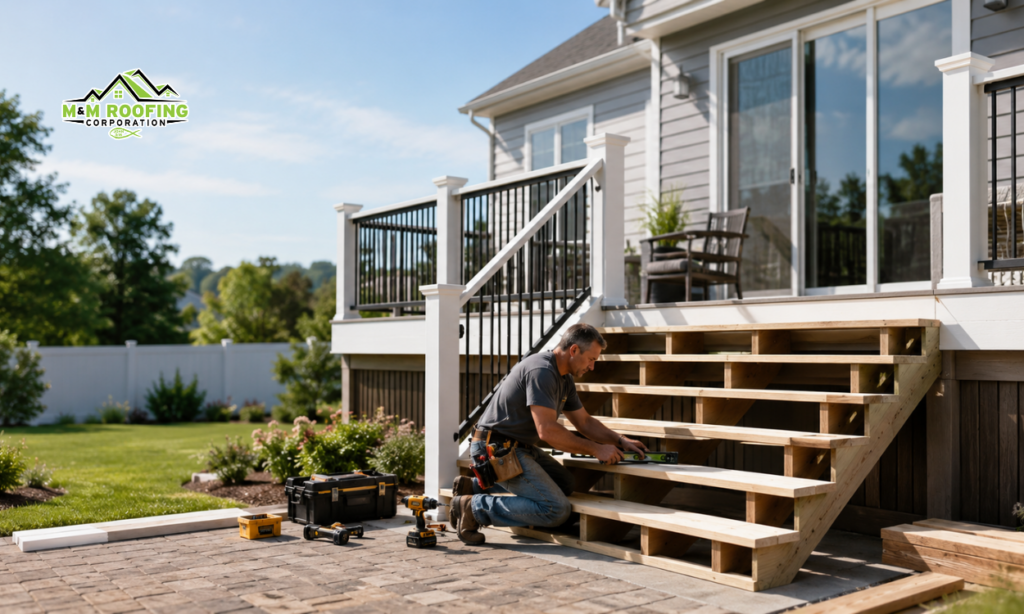
Step 1: Inspect and Measure the Existing Staircase
Measure the total rise from the finished deck surface to the landing below. Record stair width, tread depth, riser height, railing dimensions, and the staircase’s horizontal run.
Do not automatically copy an old staircase. Older stairs may not meet current construction requirements.
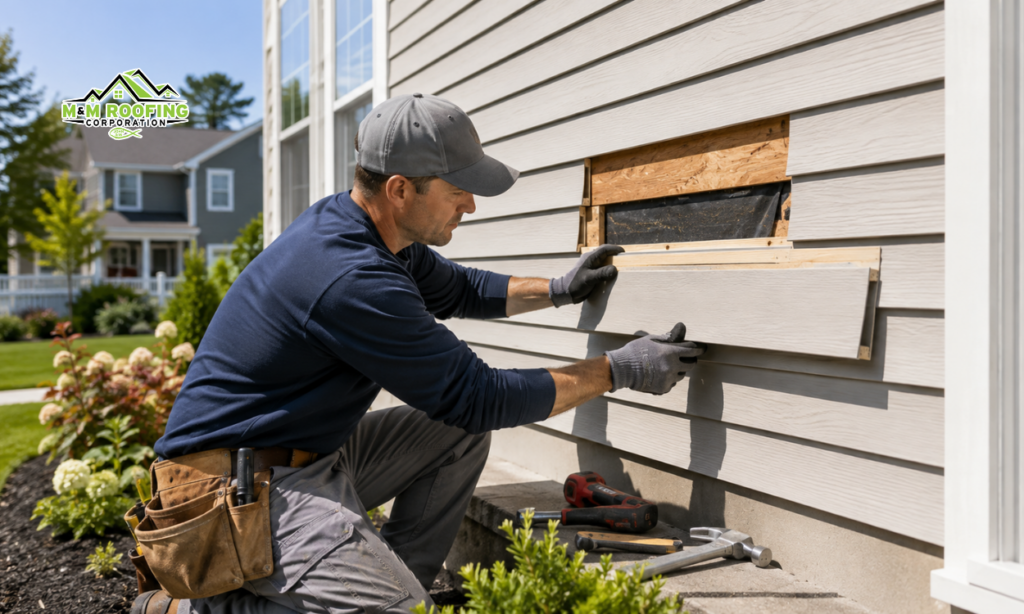
Step 2: Remove the Old Deck Steps
Remove railings and treads carefully before disconnecting the stringers from the deck.
Watch for hidden rot around fasteners and attachment points. If the rim joist or surrounding framing is deteriorated, repair that structure before installing new stairs.
Step 3: Calculate the New Stair Layout
To understand how to build new deck stairs, calculate the number of risers using the total vertical height.
The rise must remain consistent from one step to the next. Once the number of risers is established, determine the tread depth and overall horizontal run.
Accurate layout is essential because small inconsistencies can create uncomfortable or unsafe steps.
Step 4: Cut or Install New Stringers
Stringers support the staircase and determine the geometry of every step. Mark each stringer with a framing square and cut carefully.
All stringers should match. The number required depends on stair width, tread material, and manufacturer specifications.
Composite treads often require closer stringer spacing than traditional dimensional lumber.
Step 5: Secure the Stringers to Solid Framing
Attach the upper ends using structural connectors and approved fasteners. Never depend on deck boards alone to support the staircase.
At the bottom, stringers should rest on a stable landing or appropriately prepared support rather than directly on soil.
If the connection area needs reinforcement, homeowners can request a deck project evaluation before rebuilding the staircase.
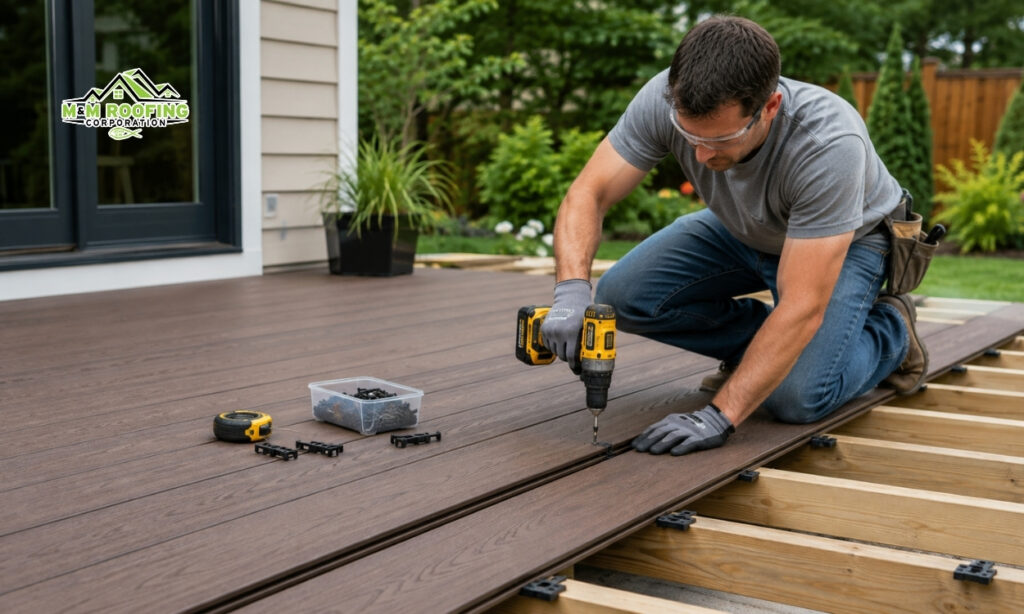
Step 6: Install Treads and Risers
Cut the replacement boards consistently and secure them with exterior-rated fasteners suitable for the material.
Leave appropriate spacing between deck boards for drainage and seasonal movement. If composite decking is used, follow the manufacturer’s installation requirements.
Step 7: Rebuild the Railing and Handrail
Replace loose, deteriorated, or undersized railing components while the stairs are open.
Posts should connect securely to structural framing, not just finish boards. Check the entire railing for movement before considering the project complete.
Step 8: Inspect the Finished Stairs
Walk the staircase slowly and check for movement, uneven tread heights, exposed fasteners, unstable railings, and weak connections.
A properly rebuilt staircase should feel solid from the first step to the landing.
Can You Replace Deck Stairs Yourself?
A DIY deck stairs replacement may be reasonable for an experienced homeowner working on a short, straightforward staircase with sound deck framing.
Professional installation is usually a better option when the stairs are elevated, structural rot is present, railings require rebuilding, composite materials are involved, or the geometry is complex.
Homeowners searching for deck stair installation contractors or wondering whether to hire someone to replace deck stairs should look for a contractor who can evaluate both the staircase and the deck structure supporting it.
M&M Roofing Corp provides deck and exterior services for homeowners and can help evaluate whether repair or full replacement is the better approach.
Replace the Structure, Not Just the Symptoms
Deck stairs are only as safe as the stringers, framing, connections, treads, and railings working together.
If several parts are deteriorated, rebuilding the staircase correctly is usually more dependable than repeatedly repairing individual boards. Careful measurements, solid structural connections, and properly installed railings help create stairs that feel stable and perform reliably for years.
Need help with your roof?
Reading a guide is helpful, but every home is different. Contact M&M Roofing Corp for roofing, gutters, siding or exterior service in New Jersey.