How Often Should You Clean Your Gutters? A Homeowner’s Seasonal Guide
How Often Should You Clean Your Gutters? A Homeowner’s Seasonal Guide explains the ideal gutter cleaning frequency, when to clean gutters, and how seasonal maintenance helps protect your roof, siding, and foundation.
How Often Should You Clean Your Gutters? A Homeowner’s Seasonal Guide is a practical question for any homeowner who wants to protect the roof, siding, foundation, and exterior of the home.
For most homes, gutters should be cleaned at least twice a year: once in spring and once in fall. That said, gutter cleaning frequency depends on your property, nearby trees, roof shape, and local weather. In New Jersey, where heavy rain, falling leaves, winter debris, and spring pollen can all affect your drainage system, a simple rain gutter cleaning schedule can prevent expensive problems before they start.
How Often to Clean Gutters on a Typical Home
A good baseline is to clean your gutters every six months. Spring gutter cleaning clears out winter debris, roof grit, small branches, and anything that settled during colder months. Fall gutter cleaning is usually even more important because leaves, acorns, pine needles, and organic buildup can quickly block water flow before winter.
For many homeowners, the best time to clean gutters is:
- Late spring, after pollen, seed pods, and winter debris have collected
- Mid-to-late fall, after most leaves have dropped
- After major storms, especially if you see branches or roof debris around the property
If your home is surrounded by trees, especially oak, maple, pine, or other high-shedding trees, you may need routine gutter maintenance three or four times a year. Homes with gutter guards still need inspections, because guards reduce debris but do not make gutters maintenance-free.
If your gutters have not been checked in a while, scheduling professional gutter cleaning in New Jersey can help you reset your maintenance routine before small blockages turn into bigger exterior issues.
Why Is Gutter Cleaning Important for Your Roof and Home Exterior?
Gutters are designed to move rainwater away from your roofline, siding, fascia, and foundation. When they are clear, water drains safely through the downspouts. When they are blocked, water looks for another path — and that is where damage begins.
The consequences of blocked gutters can include roof leaks, rotten fascia boards, stained siding, basement moisture, foundation problems, ice dams, mosquito activity, and overflowing water near entryways or walkways. A clogged gutter may look minor from the ground, but the water pressure and trapped debris can quietly damage the parts of your home that are most expensive to repair.
Seasonal gutter maintenance is not only about keeping things tidy. It is about protecting the roof system and giving rainwater a clean exit from the property.
Signs Gutters Need Cleaning Before Your Next Scheduled Service
Even if you follow a normal rain gutter cleaning schedule, there are warning signs that your gutters may need attention sooner.
Look for water spilling over the edge during rain, sagging gutter sections, plants growing from the gutter line, dark streaks on siding, loose downspouts, water pooling near the foundation, or birds and insects gathering around the roofline. Another common sign is seeing leaves or granules from asphalt shingles sitting inside the gutter channel.
If you notice any of these signs, it is better not to wait for the next season. A quick inspection and cleaning can prevent clogged gutters from affecting your roof, siding, or foundation.
When to Clean Gutters in New Jersey
New Jersey homes deal with four distinct seasons, which makes timing important. Spring is ideal for clearing winter buildup and checking whether snow, ice, or wind caused any gutter movement. Summer is a good time for spot checks, especially after storms. Fall is the most important season for removing leaves before freezing temperatures arrive. Winter cleaning is less common, but it may be needed if ice dams, heavy debris, or drainage issues are already visible.
For homes in areas like Scotch Plains, Westfield, Union, Cranford, Clark, Fanwood, and nearby Union County towns, tree coverage can make fall buildup especially heavy. In those cases, cleaning once in early fall and again after most leaves have dropped may be the safer option.
Homeowners who want a local, roof-aware approach can book gutter cleaning services with M&M Roofing Corp to keep drainage working properly through New Jersey’s seasonal changes.
DIY Gutter Cleaning Tips for Homeowners
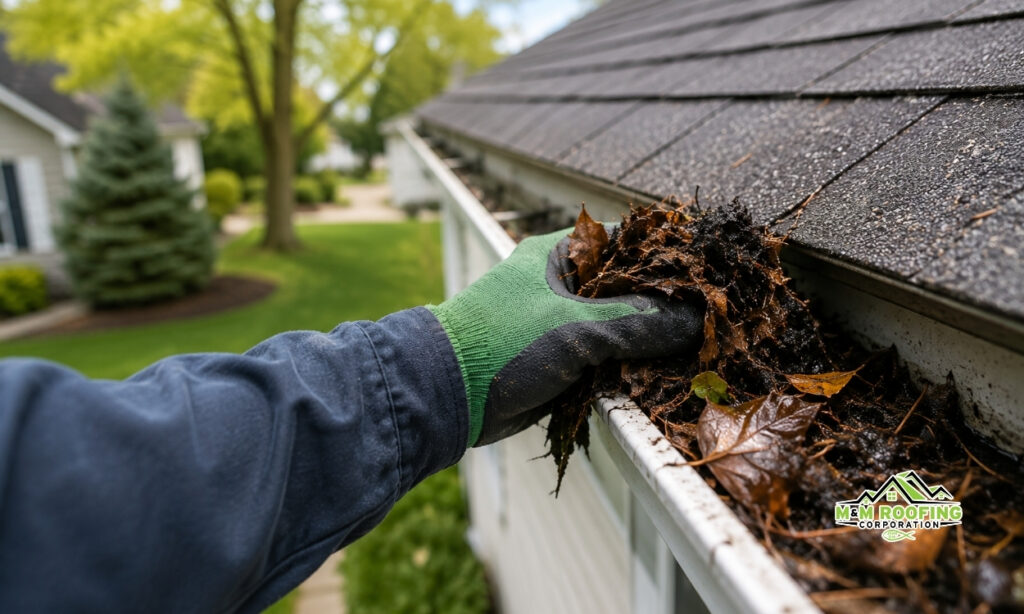
Some homeowners prefer to handle basic gutter maintenance themselves. If you do, safety should come first. Use a stable ladder, avoid working alone, wear gloves, and never lean too far to one side. Remove debris by hand or with a gutter scoop, flush the channel with water, and confirm that downspouts are draining away from the home.
Also check for loose brackets, separated seams, rust, cracks, and areas where the gutter pulls away from the fascia. These small details matter because a clean gutter that is not properly attached may still fail during heavy rain.
DIY gutter cleaning tips are useful for light maintenance, but steep roofs, high gutters, fragile fascia, or heavy debris are good reasons to call a professional. A roofing and exterior contractor can also spot roofline issues that may not be obvious from the ground.
A Simple Homeowner Gutter Maintenance Guide
The easiest way to stay consistent is to follow a seasonal plan:
Spring
Clean gutters, flush downspouts, remove winter debris, and inspect for loose fasteners or damaged sections.
Summer
Check after heavy thunderstorms and look for overflow, sagging, or water pooling near the home.
Fall
Schedule fall gutter cleaning after most leaves have dropped. If you have many trees, plan a second check before winter.
Winter
Watch for icicles, ice dams, and water backing up near the roof edge. These may point to drainage or ventilation problems.
This kind of routine gutter maintenance helps you catch problems early instead of reacting after water damage appears.
Final Answer: How Often Should You Clean Your Gutters?
Most homeowners should clean their gutters twice a year, in spring and fall. If your home has heavy tree coverage, frequent storms, or a history of clogged downspouts, three to four cleanings per year may be more realistic.
The right schedule is the one that keeps water moving freely away from your home. Gutters are easy to ignore when they are working, but once they overflow, the damage can spread quickly to the roof, siding, fascia, and foundation.
If you are unsure when to clean gutters at your home, M&M Roofing Corp can inspect the condition of your drainage system and recommend the right maintenance schedule. To protect your roofline before the next storm or leaf-heavy season, request a gutter cleaning estimate from M&M Roofing Corp.
Need help with your roof?
Reading a guide is helpful, but every home is different. Contact M&M Roofing Corp for roofing, gutters, siding or exterior service in New Jersey.