How to Repair Siding: A Homeowner’s Guide to Fixing Exterior Damage
How to repair siding depends on the material, damage size, and whether water has reached the wall behind it. This guide covers vinyl, wood, aluminum, loose panels, patch kits, and when replacement is better.
How to repair siding depends on the type of siding, the size of the damage, and whether the issue is cosmetic or allowing water behind your home’s exterior.
Siding protects your home from rain, wind, pests, moisture, and everyday weather exposure. When a panel cracks, pulls loose, warps, dents, or develops a hole, the damage should not be ignored. A small siding issue can grow into water damage, insulation problems, or exterior rot if it is left open. This guide explains common siding repairs, when DIY siding repair makes sense, and when calling a professional is the safer choice.
Why Exterior House Siding Repair Matters
Exterior house siding repair is about more than curb appeal. Siding is part of your home’s protective shell. When it is damaged, moisture can get behind the surface and affect sheathing, trim, framing, insulation, or interior walls.
Common siding problems include cracks, holes, loose panels, storm damage, hail marks, warped sections, faded materials, and water-damaged areas. Some repairs are simple. Others require replacing damaged siding panels or checking the wall behind the siding.
If your siding damage is spreading or you are not sure what caused it, M&M Roofing Corp can help with professional siding repair services for New Jersey homes.
Start by Identifying the Type of Siding
The best repair method depends on the material. Vinyl, wood, aluminum, fiber cement, and composite siding all behave differently.
Vinyl siding is flexible, common, and often repaired with patch kits, replacement panels, or specialty tools. Wood siding can be patched, filled, sanded, or replaced depending on rot and moisture damage. Aluminum siding may dent or bend and can be harder to blend after repair. Fiber cement and composite siding often require careful cutting, sealing, and repainting.
Before you start, inspect the damage closely and confirm what type of siding you have.
How to Fix a Hole in Siding
Small holes can often be patched, but the repair method depends on the size.
For vinyl siding, a siding patch kit or exterior-grade vinyl repair caulk may work for small punctures. Clean the area, remove loose edges, apply the patching material, smooth it carefully, and let it cure. If the hole is large or the panel is cracked, replacing the panel usually looks cleaner.
For wood siding, small holes may be filled with exterior wood filler or epoxy. Once dry, the area should be sanded, primed, and painted. If the wood is soft, swollen, or rotten, patching will not solve the problem. The damaged board may need replacement.
For aluminum siding, small holes can sometimes be patched with exterior metal patching material and painted, but dents and visible patches can be difficult to hide.
Fix Cracked Vinyl Siding Without Making It Worse
To fix cracked vinyl siding, first check whether the crack is small or whether it runs across the panel. Small cracks may be sealed with vinyl siding repair caulk or covered with a color-matched patch. Larger cracks usually mean the panel should be replaced.
Vinyl expands and contracts with temperature changes, so it should not be nailed tightly or sealed in a way that prevents movement. Poor repairs can lead to buckling, gaps, or future cracking.
Useful vinyl siding repair tools may include a zip tool, utility knife, exterior caulk, siding patch kits, replacement panels, gloves, and a level. A zip tool helps unlock vinyl panels so the damaged piece can be removed without tearing surrounding sections.
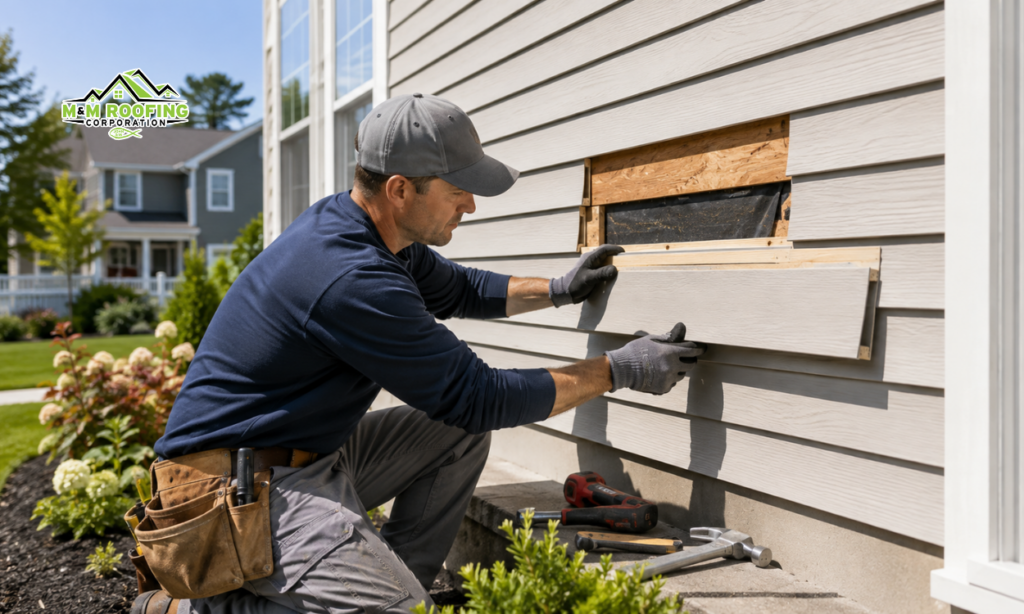
How to Replace a Piece of Siding
If a panel is too damaged to patch, replacement is usually the better repair.
The basic process for vinyl siding is:
- Use a zip tool to unlock the panel above the damaged piece.
- Remove nails or fasteners from the damaged panel.
- Slide out the broken siding section.
- Cut or fit a matching replacement panel.
- Fasten it loosely so the siding can expand and contract.
- Lock the panels back into place.
Matching siding can be tricky because older siding often fades from sun exposure. A new panel may be the same product but still look slightly different. If the damaged area is highly visible, a professional can help decide whether patching, panel replacement, or a larger section repair will look best.
For a cleaner finish, you can request siding replacement and exterior repair guidance from M&M Roofing Corp.
How to Patch Wood Siding
Wood siding repair depends heavily on whether the wood is dry and solid. If the board has a small hole or shallow damage, exterior wood filler or epoxy may be enough.
Clean the area, remove loose paint or splinters, fill the damaged section, sand it smooth, prime it, and repaint it with exterior-grade paint. If the damage is caused by rot, moisture, or insects, do not simply fill over the problem. Rotten wood must be removed and replaced.
Water damaged siding repair often requires checking nearby trim, caulk lines, flashing, gutters, and roof edges. The source of moisture matters just as much as the damaged board.
Repairing Aluminum Siding
Repairing aluminum siding can be more challenging because dents, bends, and patches may remain visible. Small holes can sometimes be patched and painted, while dented sections may need panel replacement.
If aluminum siding is creased, badly dented, or pulled away from the wall, replacement may be more effective than cosmetic repair. Matching the color can be difficult, especially on older homes, so it is worth weighing appearance against cost.
Fix Loose Siding Panels Before They Pull Away
Loose siding panels can happen after wind, impact, poor installation, or fastener failure. A loose panel may rattle, shift, or leave gaps where water can enter.
For vinyl siding, panels may need to be re-locked with a zip tool. If fasteners are missing or the panel is damaged at the nail hem, the section may need replacement. For wood or fiber cement siding, loose boards may need proper fastening, sealing, and repainting.
Do not ignore loose siding, especially before storms. Wind can lift panels and cause larger sections to fail.
Siding Replacement vs Repair: Which Is Better?
Siding replacement vs repair depends on the condition, age, material, and extent of damage.
Repair may be enough when:
- Damage is small and isolated
- The siding is otherwise in good condition
- The color can be matched
- There is no moisture behind the siding
- The panel is not warped or brittle
Replacement may be smarter when:
- Damage covers several panels
- Siding is cracked, brittle, or warped
- There is water damage behind the surface
- The material is faded or hard to match
- The home needs a larger exterior update
A professional inspection can help prevent spending money on a patch that will not last.
What Affects Siding Repair Cost?
Siding repair cost varies depending on the material, height of the work area, size of the damage, matching requirements, labor, and whether hidden water damage is found.
Small vinyl repairs are usually less involved than replacing several panels or repairing rotted wood. Water damage, trim repairs, repainting, and hard-to-match materials can increase the cost. The best estimate comes after seeing the siding in person.
Siding Maintenance Tips to Prevent Future Damage
Good maintenance can reduce future siding repairs. Walk around your home a few times a year and look for cracks, gaps, loose panels, stains, warping, or soft wood. Keep gutters clean, trim branches away from the house, repair caulk around openings, and address roof or gutter leaks quickly.
Moisture problems often start small. Catching them early helps protect both the siding and the structure behind it.
Final Thoughts on How to Repair Siding
Learning how to repair siding helps homeowners understand when a small patch is reasonable and when replacement is the better long-term solution. Small vinyl holes, minor cracks, loose panels, and shallow wood damage may be repairable. Larger cracks, water damage, rotted wood, storm damage, and mismatched panels often need professional attention.
Your siding protects your home every day. If the damage is visible, spreading, or connected to moisture, M&M Roofing Corp can help with trusted siding services and exterior repair support for New Jersey homeowners.
Need help with your roof?
Reading a guide is helpful, but every home is different. Contact M&M Roofing Corp for roofing, gutters, siding or exterior service in New Jersey.