How to Repair Holes in Vinyl Siding: A Homeowner’s Step-by-Step Guide
How to Repair Holes in Vinyl Siding: A Homeowner’s Step-by-Step Guide explains when to use caulk, a vinyl siding patch kit, or panel replacement to protect your home exterior.
How to Repair Holes in Vinyl Siding: A Homeowner’s Step-by-Step Guide helps you understand when a small patch is enough and when replacing the damaged siding panel is the smarter move.
Vinyl siding is durable, low-maintenance, and popular for many homes, but it is not indestructible. Hail, flying debris, lawn equipment, heat damage, loose fixtures, and everyday impact can leave cracks, dents, or holes in the surface. The good news is that many small holes can be repaired. The key is knowing which method fits the damage, how to match the siding, and when to call a professional before moisture gets behind your exterior.
Why Holes in Vinyl Siding Should Not Be Ignored
A small hole in siding may seem cosmetic, but it can create a path for water, insects, dirt, and air to get behind the panels. Over time, moisture trapped behind siding can affect sheathing, insulation, trim, and the surrounding exterior.
Repairing damaged vinyl siding early helps protect your home’s exterior and keep curb appeal intact. If the siding damage is widespread, near windows or doors, or caused by storm impact, M&M Roofing Corp can help with professional vinyl siding repair and exterior services
Check the Damage Before You Patch
Before starting any DIY vinyl siding repair, inspect the area closely. The best way to patch vinyl siding depends on the size and location of the hole.
Ask yourself:
- Is the hole small, medium, or large?
- Is the panel cracked around the opening?
- Is the siding warped, melted, or brittle?
- Is there moisture or softness behind the siding?
- Can the color and texture be matched?
- Is the damage from hail, impact, or heat?
Small holes may be fixed with vinyl siding repair caulk or a vinyl siding patch kit. Larger holes often need a patch cut from matching siding, while severe damage may require replacing the entire panel.
Tools and Materials for Homeowner Vinyl Siding Repair
For basic repair, you may need:
- Exterior-grade vinyl siding repair caulk
- Utility knife
- Putty knife
- Sandpaper or cleaning cloth
- Matching paint if needed
- Vinyl siding patch kit
- Replacement siding piece for larger holes
- Zip tool for unlocking siding panels
- Work gloves and safety glasses
Matching vinyl siding for repairs can be the hardest part, especially if the existing siding has faded from sun exposure. If possible, use a leftover piece from the original installation or take a small sample to compare color and profile.
How to Fix a Small Hole in Vinyl Siding
Small holes, such as nail holes or minor punctures, are usually the easiest to repair.
Step 1: Clean the Damaged Area
Wash the siding around the hole with mild soap and water. Remove dirt, dust, loose vinyl, and debris. Let the area dry completely before applying any product.
Step 2: Apply Vinyl Siding Repair Caulk
Use exterior-grade caulk designed for vinyl or siding applications. Fill the hole carefully, slightly overfilling it so the material can be shaped.
Step 3: Smooth the Surface
Use a putty knife or your finger with a glove to smooth the caulk. Try to follow the siding’s texture and keep the repair neat.
Step 4: Let It Cure
Allow the caulk to dry according to the product instructions. If needed, use color-matched exterior paint to blend the repair.
This method works best for small punctures. It is not ideal for large holes, cracked panels, or areas with structural damage behind the siding.
How to Patch a Medium Hole in Vinyl Siding
For a medium-sized hole, a vinyl siding hole repair kit or patch may provide a cleaner result.
Step 1: Trim Loose Edges
Use a utility knife to remove rough or curled edges around the hole. Do not cut more than necessary.
Step 2: Cut a Matching Patch
Cut a patch from a spare piece of vinyl siding. The patch should be larger than the hole and shaped to sit neatly over the damaged area.
Step 3: Apply Adhesive or Repair Caulk
Use a compatible exterior adhesive or siding repair caulk around the back edge of the patch. Avoid using too much, which can create messy edges.
Step 4: Press the Patch in Place
Press the patch over the hole and hold it firmly. Wipe away excess material before it dries.
Step 5: Blend the Repair
A patch hole in vinyl siding may still be visible if the color does not match perfectly. For highly visible areas, replacing the panel may look better.
For homeowners who want a cleaner finish, M&M Roofing Corp offers exterior siding services for damaged vinyl siding
When Replacing the Panel Is Better Than Patching
Patching works for smaller damage, but it is not always the best solution. You may need panel replacement if the hole is large, the siding is cracked across the panel, the vinyl is brittle, or the area has hail damage.
Fixing hail damage on vinyl siding can be tricky because hail often creates multiple impact marks across several panels. In that case, repairing one hole at a time may leave the exterior looking uneven.
Replacing the damaged panel is also better when water has entered behind the siding or when the hole is near seams, corners, windows, doors, or trim.
Step-by-Step Vinyl Siding Repair: Replacing a Damaged Panel
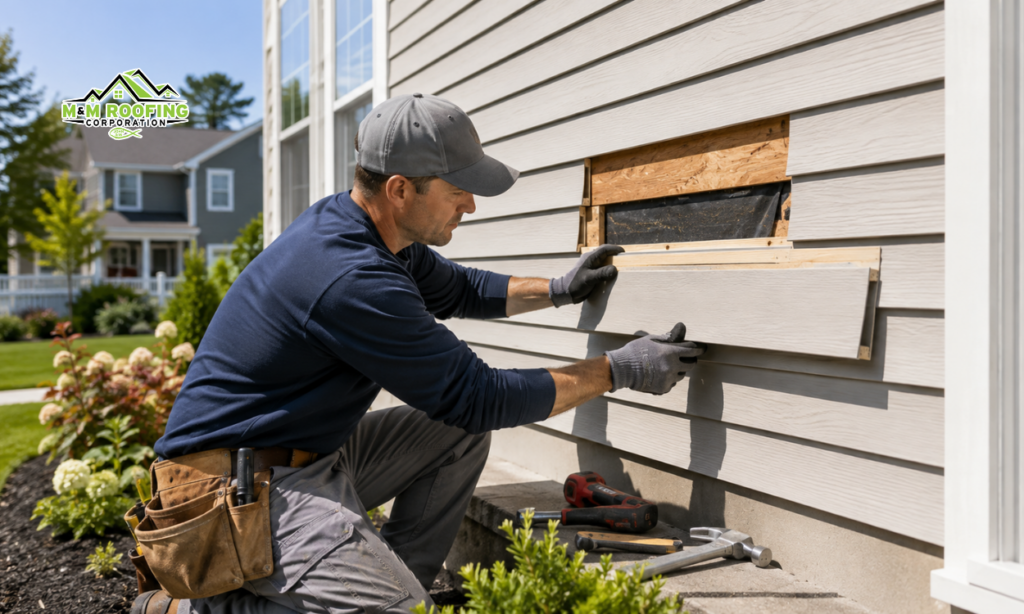
If a full panel needs to be replaced, the process usually involves unlocking the siding with a zip tool, removing fasteners, sliding out the damaged section, and installing a matching replacement panel.
This work requires care because vinyl siding expands and contracts with temperature changes. Nails should not be driven too tightly, and panels need room to move. Poor installation can lead to buckling, gaps, or future damage.
If you are not comfortable removing siding panels, it is better to hire a professional. M&M Roofing Corp can help with reliable exterior services and siding repair in New Jersey
Can You Fill Holes in Vinyl Siding Permanently?
You can fill holes in vinyl siding, but the repair quality depends on the size of the hole and the product used. Caulk can work for small holes. A vinyl siding patch kit can work for moderate damage. Large holes, cracked panels, melted siding, or severe impact damage are usually better handled with panel replacement.
A patch may protect the area, but it may not disappear completely. If appearance matters, matching vinyl siding for repairs is important.
Final Thoughts on Repairing Holes in Vinyl Siding
Learning how to repair holes in vinyl siding can help homeowners handle small exterior problems before they become bigger issues. For tiny punctures, vinyl siding repair caulk may be enough. For medium damage, a patch kit can help. For large holes, cracked panels, or storm damage, replacing the damaged siding is usually the better long-term fix.
Your siding protects your home from weather, moisture, and exterior wear. If the damage is visible, spreading, or difficult to match, M&M Roofing Corp can inspect the area and recommend the right repair. For help with siding damage, request professional vinyl siding repair from M&M Roofing Corp
Need help with your roof?
Reading a guide is helpful, but every home is different. Contact M&M Roofing Corp for roofing, gutters, siding or exterior service in New Jersey.