How to Repair Vinyl Siding
How to repair vinyl siding depends on whether the damage is a small hole, crack, loose panel, melted section, or storm-related issue. This guide explains when to patch, replace, or call a professional.
How to repair vinyl siding depends on the type of damage, the size of the problem, and whether the panel can be patched or needs to be replaced.
Vinyl siding is durable, low-maintenance, and popular for residential exteriors, but it is not indestructible. Cracks, holes, loose panels, melted sections, and storm damage can let moisture behind the siding, affect curb appeal, and create bigger exterior problems if ignored. The good news is that many small issues can be fixed with the right tools and a careful approach.
This guide explains the main types of vinyl siding repair, when DIY vinyl siding repair makes sense, and when it is safer to call a professional—especially for New Jersey homes exposed to wind, rain, snow, and seasonal temperature changes.
Start by Identifying the Type of Vinyl Siding Damage
Before you buy materials or start removing panels, inspect the damaged area closely. Vinyl siding problems usually fall into a few categories: cracks, small holes, larger holes, loose panels, melted siding, or full panel damage.
A tiny hole near the bottom of a panel may be suitable for a vinyl siding patch kit or vinyl siding hole filler. A long crack, warped section, or panel pulled loose after a storm may require replacing damaged vinyl siding panels instead. The goal is not just to hide the damage, but to restore the siding’s ability to shed water and protect the wall underneath.
If the damage is widespread or you are unsure whether moisture has reached the wall sheathing, M&M Roofing Corp can help with professional vinyl siding repair and siding services in New Jersey.
Tools and Materials Needed for Vinyl Siding Repair
For basic repairs, you may need a few common materials and one tool that is especially important for this job.
A typical repair kit may include:
- Zip tool for vinyl siding
- Utility knife
- Replacement siding panel
- Matching vinyl siding patch kit
- Exterior-grade caulk or vinyl siding hole filler
- Tape measure
- Tin snips
- Pry bar
- Hammer or siding nails
- Work gloves
The zip tool for vinyl siding is used to unlock one siding panel from another without damaging the surrounding pieces. It is especially helpful when learning how to remove vinyl siding or how to replace a piece of vinyl siding.
How to Fix a Small Hole in Vinyl Siding
Small holes can happen from impact, old cable clips, hail, or everyday wear. If the hole is minor and the surrounding panel is still flat and stable, patching vinyl siding holes can be a practical option.
Step 1: Clean the Area
Wash the damaged section with mild soap and water. Remove dirt, dust, and loose debris so the filler or patch can bond properly. Let the area dry fully before continuing.
Step 2: Apply Vinyl Siding Hole Filler
For a very small hole, use exterior-grade vinyl siding hole filler or color-matched caulk. Apply it carefully, smooth it with a putty knife or gloved finger, and avoid leaving a raised lump. Once dry, check whether the repair blends with the siding.
Step 3: Use a Patch for Larger Holes
For a larger puncture, a vinyl siding patch kit may be better. These kits often include a patch piece that can be trimmed to size and bonded over the damaged area. Match the color and texture as closely as possible. A patch can reduce visibility, but it may not look perfect on older faded siding.
How to Fix Cracked Vinyl Siding
To fix cracked vinyl siding, first check the length and location of the crack. A hairline crack can sometimes be sealed with exterior caulk, but a wide or spreading crack usually means the panel has lost strength.
If the crack is obvious, brittle, or located where water can enter behind the siding, replacing the panel is usually the better choice. A patched crack may look acceptable in the short term, but a full panel replacement is often cleaner and more reliable.
How to Remove Vinyl Siding with a Zip Tool
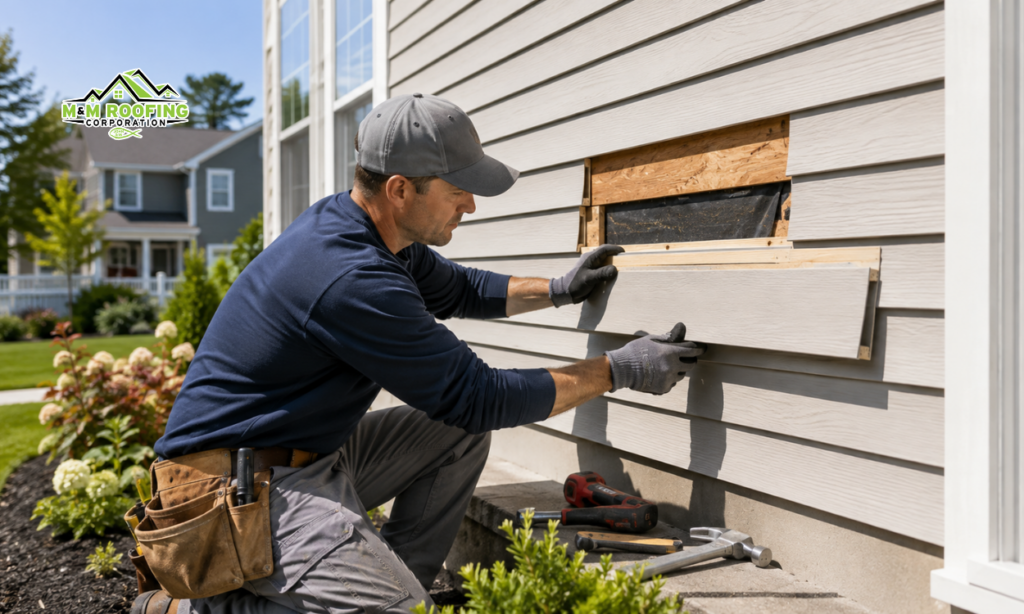
Knowing how to remove vinyl siding is essential if you need to replace a damaged panel. The zip tool lets you unlock the panel above the damaged piece.
Slide the zip tool under the lower edge of the panel above the damaged section. Hook the tool onto the panel lip and pull downward while sliding it along the seam. Once the upper panel is unlocked, gently lift it to expose the nails holding the damaged panel in place.
Remove the nails carefully. Do not force the panels or bend them too sharply, especially in cold weather when vinyl can become brittle.
Replacing Damaged Vinyl Siding Panels
Replacing damaged vinyl siding panels is the best solution for severe cracks, large holes, warped sections, and storm damage.
Step 1: Measure and Cut the Replacement Piece
Measure the damaged panel and cut a matching replacement piece. Leave a small allowance for expansion and contraction. Vinyl siding expands in heat and contracts in cold, so panels should not be nailed too tightly.
Step 2: Install the New Panel
Slide the replacement panel into place and lock it into the panel below. Nail it through the center of the nail slots, leaving a tiny amount of movement so the vinyl can expand naturally.
Step 3: Reconnect the Upper Panel
Use the zip tool to pull the upper panel back down and lock it into the replacement piece. Check that the siding sits flat and that the seams align with the surrounding wall.
For homeowners who want a clean match and proper installation, M&M Roofing Corp offers residential siding repair and replacement services for exterior damage, loose panels, and worn siding.
How to Repair Melted Vinyl Siding
Melted vinyl siding is often caused by grill heat, reflected sunlight from windows, or high heat near exterior equipment. Unfortunately, repair melted vinyl siding usually means replacing the warped or melted panel. Once vinyl has distorted, it cannot be reshaped back to its original profile.
The best fix is to remove the affected panel and install a matching replacement. If the heat source remains, the same problem may happen again. Consider moving grills away from the wall, checking window reflection issues, or using a more heat-resistant material in that area.
How to Fix Loose Vinyl Siding
Loose siding can make noise in the wind and may allow water to reach the wall behind it. To fix loose vinyl siding, inspect whether the panel has simply come unlocked or whether nails, fasteners, or the siding channel have failed.
If the panel is only unhooked, a zip tool can help snap it back into place. If the nail slots are torn or the panel is cracked, replacement may be necessary. Avoid driving nails tightly through the face of the siding; this can restrict movement and create more damage.
Storm Damaged Vinyl Siding Repair
Storm damaged vinyl siding repair should be handled carefully. Hail, wind, falling branches, and flying debris can crack panels, loosen corners, damage trim, or expose the wall beneath the siding.
After a storm, walk around your home and look for broken panels, missing pieces, gaps around corners, dents, and water stains near exterior walls. If you suspect storm damage, document it with photos before making temporary repairs.
M&M Roofing Corp can inspect your siding and roof together, which is useful after heavy weather because exterior damage often affects more than one part of the home. To get help fast, request an exterior siding and roofing inspection.
When DIY Vinyl Siding Repair Is Not Enough
DIY vinyl siding repair can work for a small hole or a simple loose panel, but not every repair is worth attempting yourself. Call a professional if the siding damage covers multiple panels, the wall behind the siding feels soft, the damage is high on the house, or you cannot find a good material match.
Professional siding repair can also help prevent moisture problems, poor panel alignment, and future wind damage. This matters in New Jersey, where siding has to handle seasonal expansion, cold weather, storms, and heavy rain.
Final Thoughts on Vinyl Siding Repair
Learning how to repair vinyl siding helps you understand what can be patched, what should be replaced, and when a small exterior problem could lead to bigger home damage. Small holes may be fixed with a vinyl siding patch kit or filler. Cracked, loose, melted, or storm-damaged panels often need a more complete repair.
If your siding damage is visible, spreading, or difficult to access, it is worth getting a professional opinion. M&M Roofing Corp can help restore your home’s exterior with trusted siding services in New Jersey and clear recommendations before the damage grows.
Need help with your roof?
Reading a guide is helpful, but every home is different. Contact M&M Roofing Corp for roofing, gutters, siding or exterior service in New Jersey.