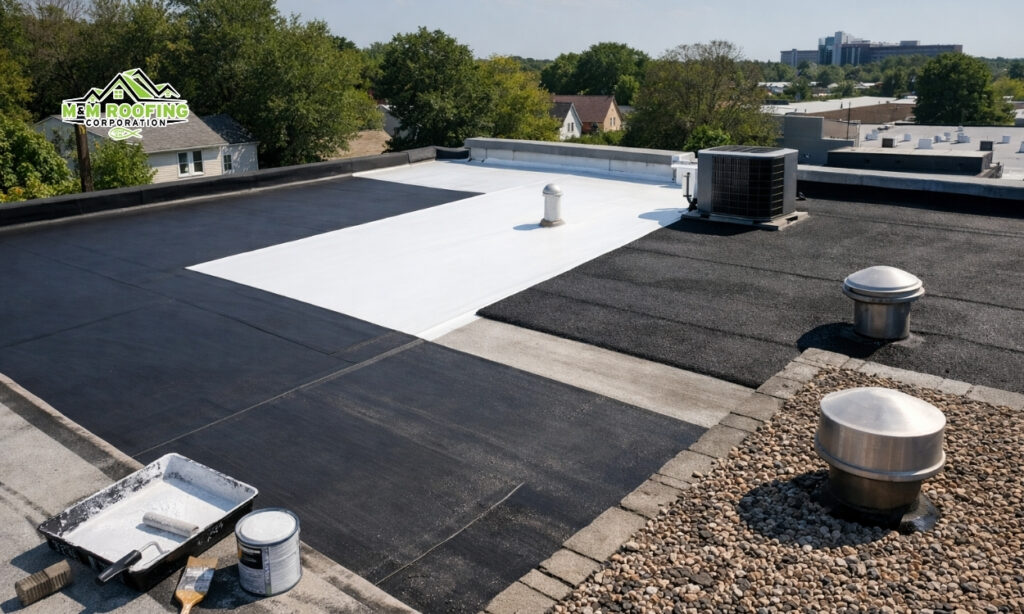
If you are asking what is the best material for a flat roof?, the honest answer is that it depends on your budget, your building, and how long you want the system to last.
For most homeowners, the best choice is not simply the cheapest one. A flat roof has to handle standing water, temperature swings, sun exposure, and long-term maintenance. In New Jersey, that matters even more because roofs deal with heavy rain, winter freeze-thaw cycles, humidity, and summer heat. The best flat roof for residential homes is usually the one that balances durability, repairability, and value over time.
If your current system is already aging or leaking, it helps to speak with a local contractor about flat roof repair in New Jersey before small issues turn into a full replacement.
Best Material for a Flat Roof: What Homeowners Should Compare First
A proper flat roof materials comparison should look at more than appearance. The key factors are lifespan, seam strength, resistance to ponding water, ease of repair, energy efficiency, and installation quality.
Some materials work better for garages, porches, and additions. Others are better for larger roof sections on residential homes. That is why there is no single answer for every property, but there are clear front-runners.
The most common flat roof options today include:
- EPDM rubber roofing
- TPO roofing system
- PVC flat roof material
- Modified bitumen roof
- Built-up roofing (BUR)
Each has different strengths, and understanding the pros and cons of flat roof materials can save you from making a costly mistake.
EPDM Rubber Roofing: A Reliable and Cost-Effective Choice
EPDM rubber roofing is one of the most popular flat roof systems for homes. It is a synthetic rubber membrane known for flexibility, weather resistance, and relatively straightforward repairs.
EPDM is often a strong choice when homeowners want a proven system without jumping to the highest installation price. It performs well in cold climates, which makes it attractive in New Jersey.
Why many homeowners choose EPDM
- Good resistance to cracking in colder weather
- Lower installation cost than some single-ply alternatives
- Easy to maintain and patch when damaged
- Long service life when installed correctly
When people ask about the longest lasting flat roof material, EPDM is usually part of the conversation, especially if the roof is not exposed to harsh chemical conditions or frequent foot traffic.
TPO Roofing System: Energy Efficiency and Modern Performance
A TPO roofing system has become a go-to option for many residential and light commercial flat roofs. TPO is a single-ply membrane valued for heat-reflective performance and clean, welded seams.
In an EPDM vs TPO roofing comparison, TPO often appeals to homeowners who want better solar reflectivity and a newer membrane system. It can help reduce heat absorption, which is useful during hot summers.
TPO advantages
- Bright, reflective surface
- Heat-welded seams for strong waterproofing
- Good energy performance
- Clean look for modern homes and additions
TPO is often one of the most durable flat roofing materials when installed by a qualified roofer. Still, quality matters. A poor installation can shorten the lifespan of even a strong membrane.
PVC Flat Roof Material: Strong Seams and Premium Performance
PVC flat roof material is usually seen as a premium option. Like TPO, it uses welded seams, but it is often chosen where higher durability and chemical resistance are needed.
For residential properties, PVC may be a smart investment when the homeowner wants a tougher system and is comfortable with a higher upfront cost. It is not always the first answer for budget-conscious homes, but it performs very well when installed correctly.
Modified Bitumen Roof and Built-Up Roofing (BUR)
A modified bitumen roof is a multi-layer asphalt-based system that has been used on residential flat roofs for many years. It is known for toughness and familiarity, especially on older homes and extensions.
Built-up roofing (BUR) is another traditional system made from layers of bitumen and reinforcing materials. It has a long track record, but it can be heavier and more labor-intensive than modern single-ply membranes.
When these systems still make sense
- You want a time-tested roofing assembly
- The structure is suited to a layered system
- You prefer redundancy through multiple protective layers
That said, many homeowners today lean toward EPDM or TPO because they are cleaner, lighter, and often easier to maintain.
So, What Is the Best Material for a Flat Roof in New Jersey?
For many homes, EPDM and TPO are the top two answers.
If you want dependable performance and solid value, EPDM is often the best material for a flat roof. If you care more about energy efficiency and welded seams, TPO may be the better fit. PVC is an excellent premium choice, while modified bitumen and BUR still have value in the right situation.
In practical terms, the best system usually comes down to:
- The roof size and shape
- Drainage conditions
- Sun exposure
- Your maintenance expectations
- Your budget for installation and future repairs
If you are comparing systems, this guide to roofing materials for New Jersey homes can help you understand which option makes sense for your property.
Flat Roof Replacement Cost and Long-Term Value
Flat roof replacement cost should never be judged by installation price alone. A cheaper roof that fails early is more expensive in the long run than a better system that lasts longer and needs fewer repairs.
Homeowners should also think about coatings and maintenance. In some cases, the best flat roof coating can extend the life of an existing roof, improve waterproofing, and delay replacement. But coatings are not a fix for major structural or membrane failure.
When in doubt, it is smarter to get an expert inspection and find out whether repair, coating, or replacement is the best move. You can explore flat roof repair services from M&M Roofing Corp if you are dealing with leaks, blistering, cracks, or ponding water.
Final Answer: The Best Flat Roof Material Is the One That Fits Your Home
There is no one-size-fits-all answer, but there is a clear shortlist. For most residential properties, EPDM and TPO lead the market because they offer a strong mix of durability, performance, and value. PVC is a premium contender, while modified bitumen and BUR remain valid in certain situations.
So if you are still asking what is the best material for a flat roof?, the best next step is to compare your roof’s condition, your long-term budget, and your goals with a contractor who understands residential flat roof systems in New Jersey.