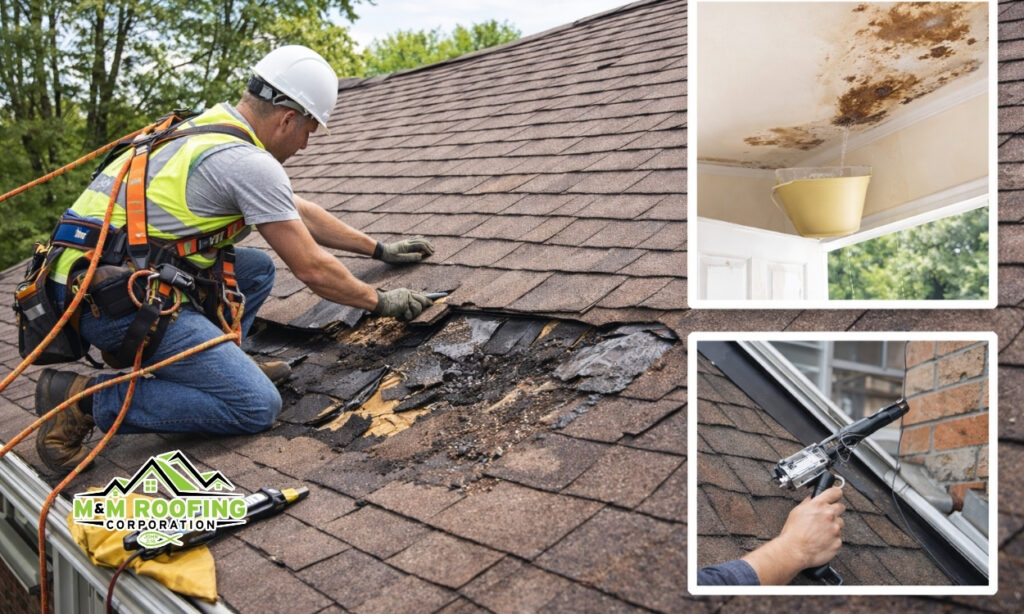
If you are wondering how to repair roof leak, you are not alone. Learning how to repair roof leak issues early can save your home from serious structural damage, mould growth, and costly repairs.
A leaking roof is one of the most common — and stressful — problems homeowners face. In this guide, we’ll explain exactly how to repair roof leak, what causes leaks, when a DIY fix is possible, and when it’s time to call a professional roofer.
Understanding the Common Causes of Roof Leaks
Before attempting any roof leak repair, it’s crucial to understand what causes roof leaks in the first place. Most leaks are not random — they result from predictable issues that develop over time.
Common causes of roof leaks include:
- Cracked or missing shingles
- Damaged flashing around chimneys, skylights, and vents
- Clogged gutters causing water backup
- Ice dams in colder climates
- Poor roof installation or aging materials
- Punctures from fallen branches or debris
Identifying the root problem is the foundation of a successful fix a leaking roof strategy.
Roof Leak Detection: Finding the Source of the Problem
Effective roof leak detection can be tricky because water often travels before it becomes visible inside your home.
Signs of water damage from roof leak:
- Water stains on ceilings or walls
- Bubbling or peeling paint
- Damp insulation in the attic
- Musty smells or mould growth
How to locate a roof leak:
- Inspect your attic during daylight to spot sunlight coming through.
- Look for wet insulation or dark water trails.
- Examine roof penetrations like vents and chimneys.
- Check shingles for cracks, curling, or missing pieces.
Proper detection ensures your roof leak repair from inside or outside addresses the real problem.
How to Repair a Roof Leak: Step-by-Step Overview
Knowing how to repair a roof leak depends on the severity and location of the issue. Below is a general process used in many roof leak repair DIY scenarios.
Step 1: Safety First
- Use a sturdy ladder
- Wear non-slip shoes
- Avoid working on wet or icy roofs
Step 2: Remove Damaged Materials
- Lift shingles carefully
- Remove nails or old sealant
- Clean the affected area
Step 3: Apply the Repair
- Install new shingles or flashing
- Seal joints with roofing cement
- Secure with galvanized roofing nails
Step 4: Test the Repair
- Spray water on the repaired area
- Monitor inside for leaks
While this works for minor leaks, larger issues require professional assessment.
Shingles Roof Leak Repair: Fixing the Most Common Issue
A large percentage of leaks stem from damaged shingles.
How to fix a leaking roof caused by shingles:
- Replace missing or cracked shingles
- Seal minor cracks with roofing sealant
- Ensure proper overlap to direct water away
If multiple shingles are failing, it may signal deeper roof aging issues.
Roof Flashing Repair: Protecting Vulnerable Areas
Flashing directs water away from roof joints and penetrations.
Common flashing problems:
- Rusted metal
- Lifted or cracked edges
- Improper installation
Roof flashing repair methods:
- Reseal small gaps with roofing cement
- Replace severely corroded flashing
- Ensure tight sealing around chimneys and vents
Flashing failures are a major cause of emergency roof leak repair situations.
Roof Leak Repair from Inside: Temporary Solutions
In some cases, exterior access isn’t immediately possible.
Temporary roof leak fix options:
- Roofing tape on visible interior gaps
- Buckets to control dripping water
- Plastic sheeting in attic spaces
These methods help reduce water damage from roof leak, but should never replace a permanent fix.
Emergency Roof Leak Repair: What to Do Immediately
When water is actively entering your home, fast action matters.
Emergency steps:
- Protect belongings with tarps
- Relieve ceiling pressure by puncturing bulges
- Apply temporary sealant if accessible
For serious leaks, contact a professional immediately for roof leak repair near me services.
Professional help is often the safest option — especially during storms or structural damage.
Roof Leak Repair DIY vs Professional Repair
Many homeowners attempt roof leak repair DIY, but it’s important to understand the risks.
DIY roof leak repair is suitable when:
- The leak is small and visible
- The roof is easily accessible
- You have basic tools and experience
Call a roofer when:
- Leaks persist after repairs
- Structural damage is visible
- Multiple leak points exist
- You are unsure of the source
Knowing when to call a roofer for leaks can prevent costly mistakes.
Roof Leak Repair Cost: What Homeowners Should Expect
The roof leak repair cost varies depending on severity, materials, and labor.
Average cost ranges:
- Minor repairs: $150 – $400
- Flashing repair: $300 – $800
- Extensive repairs: $1,000+
Ignoring small leaks can dramatically increase repair costs over time.
Preventing Future Roof Leaks
Prevention is always cheaper than repair.
Maintenance tips:
- Inspect your roof twice a year
- Clean gutters regularly
- Replace damaged shingles promptly
- Schedule professional roof inspections
Regular maintenance minimizes the need for emergency repairs.
When to Call a Professional Roofing Company
If you’re unsure how to repair roof leak safely or effectively, professional help is the best choice.
At M&M Roofing Corp, we specialize in thorough inspections and long-lasting roof leak repair solutions.
A professional repair ensures your home stays protected — rain or shine.
Final Thoughts: How to Repair Roof Leak the Right Way
Understanding how to repair roof leak issues empowers homeowners to act quickly and make smart decisions. Whether you choose a DIY fix or professional service, early action is the key to preventing serious damage.
If you suspect a leak, don’t wait.