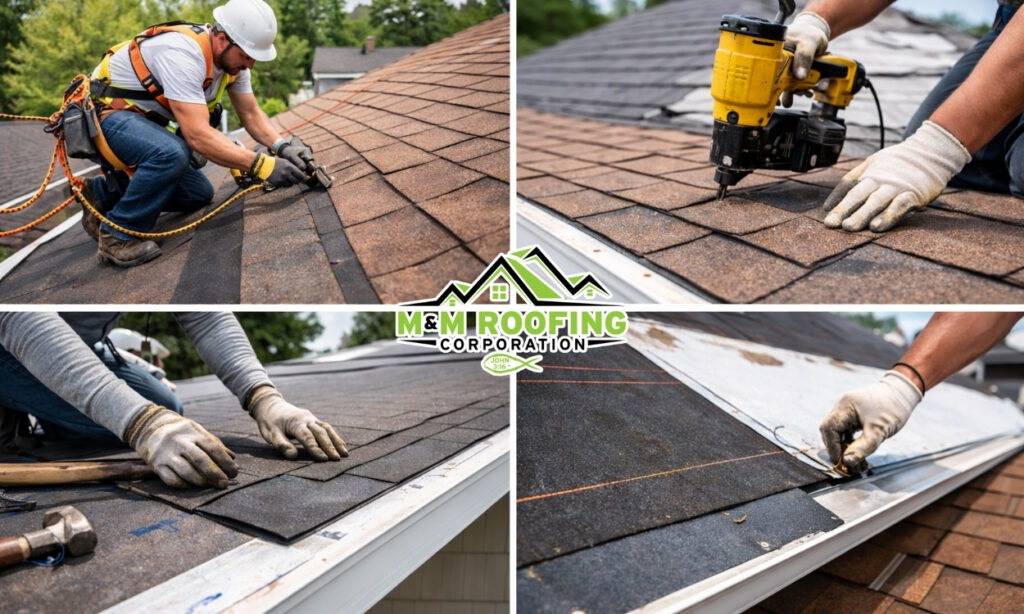
If you’re wondering how to install roof shingles, you’re not alone. Many homeowners start researching how to install roof shingles when they notice leaks, missing tabs, or aging asphalt materials. Understanding the correct process is essential because improper installation can lead to water damage, structural issues, and costly repairs.
Whether you’re considering a DIY roof shingle replacement or simply want to understand the professional process, this complete roofing shingles installation guide will walk you through everything — from roofing tools for shingle installation to installing ridge caps on a roof.
Understanding the Basics of Asphalt Shingle Installation
Before climbing onto your roof, it’s important to understand what makes asphalt shingle installation successful.
A properly installed shingle roof works as a layered water-shedding system. Each component — decking, underlayment, drip edge, starter shingles, field shingles, valleys, and ridge caps — plays a critical role in protecting your home.
Skipping steps or installing components in the wrong order can cause premature failure.
Roofing Tools for Shingle Installation
Having the right roofing tools for shingle installation ensures precision and safety.
Essential tools include:
- Roofing hammer or pneumatic nail gun
- Roofing nails (galvanized)
- Utility knife (for how to cut roof shingles accurately)
- Chalk line
- Measuring tape
- Roofing shovel (for tear-off)
- Safety harness and roof anchors
- Ladder stabilizer
Safety should always come first. Roof work is dangerous, especially on steep slopes. If you’re unsure, professional help is strongly recommended.
Step 1: Roof Inspection and Tear-Off
The first stage in any roofing shingles installation guide is inspection.
Remove old shingles down to the decking. Inspect the roof deck for:
- Rot
- Soft spots
- Mold
- Structural damage
Replace any damaged plywood or OSB boards before moving forward.
This step is crucial. Installing shingles over a compromised deck will shorten the life of your roof.
Step 2: Drip Edge Installation for Roofing
Drip edge installation for roofing protects the edges of your roof from water infiltration and directs runoff into gutters.
Install the drip edge:
- Along the eaves first
- Secure with roofing nails every 8–10 inches
- Ensure pieces overlap at least 2 inches
At the rake edges (sides of the roof), the drip edge is installed after underlayment.
Step 3: Roofing Underlayment Installation
Roofing underlayment installation adds a secondary moisture barrier.
Roll out synthetic underlayment or felt paper horizontally across the roof, starting at the bottom edge and working upward.
Key rules:
- Overlap each row by at least 2–4 inches
- Fasten securely with cap nails or staples
- Keep the surface smooth and wrinkle-free
Underlayment protects against wind-driven rain and ice dams.
Step 4: Installing Starter Shingles
Installing starter shingles is often overlooked in DIY jobs.
Starter shingles are placed along the eaves and rakes to provide:
- Proper sealing
- Wind resistance
- Clean edge alignment
Install them with the adhesive strip facing up and toward the edge of the roof.
They create the foundation for the first course of field shingles.
Step 5: Asphalt Shingle Installation Steps (Field Shingles)
Now we move into the core asphalt shingle installation steps.
Align the First Course
- Begin at the bottom corner of the roof
- Lay the first full shingle over the starter strip
- Allow proper overhang (typically 1/4 to 3/8 inch beyond drip edge)
Follow Proper Roof Shingle Nailing Pattern
The roof shingle nailing pattern is critical for wind resistance.
Standard 3-tab shingles require:
- 4 nails per shingle (minimum)
- 6 nails in high-wind zones
Place nails:
- Just below the adhesive strip
- Evenly spaced
- Flush with the surface (not overdriven)
Improper nailing is one of the most common causes of roof failure.
Maintain Shingle Roof Overlap Requirements
Shingle roof overlap requirements ensure proper water shedding.
Each new row must:
- Stagger seams from the row below
- Cover nail heads from previous course
- Maintain consistent exposure (usually 5–6 inches depending on product)
Use chalk lines every few rows to keep lines straight.
How to Cut Roof Shingles Properly
Knowing how to cut roof shingles ensures clean edges and professional results.
Use a sharp utility knife:
- Score from the top surface
- Bend and snap along the cut
- Trim edges carefully around vents, skylights, and chimneys
Always measure twice before cutting.
How to Shingle a Roof Valley
Learning how to shingle a roof valley is one of the more technical parts of installation.
There are two main methods:
Open Valley
- Install metal flashing in the valley
- Lay shingles on each side
- Trim back 2–3 inches from the center line
Closed-Cut Valley
- Shingle one side fully across the valley
- Install shingles from the other side
- Trim cleanly along the valley center
Valleys are high water-flow areas, so precision is essential.
Installing Ridge Caps on a Roof
Installing ridge caps on a roof finishes the system.
Ridge caps:
- Cover the roof peak
- Protect ventilation openings
- Provide a finished look
Cut shingles into equal sections (if not using pre-made ridge caps).
Install from the end opposite prevailing winds.
Overlap each cap evenly and secure with two nails per piece.
Roof Shingle Installation Cost Per Square
Even if you plan to DIY, it’s important to understand the roof shingle installation cost per square.
One “square” equals 100 square feet of roofing.
Average costs (professional installation):
- Materials: $100–$200 per square
- Labor: $150–$350 per square
- Total: $250–$550 per square depending on region and complexity
Factors affecting cost:
- Roof pitch
- Tear-off requirements
- Deck repairs
- Flashing replacement
- Ventilation upgrades
While DIY roof shingle replacement may save labor costs, mistakes can lead to expensive repairs later.
DIY Roof Shingle Replacement: Is It Worth It?
DIY roof shingle replacement can be done, but it’s not ideal for everyone.
Consider DIY only if:
- Roof slope is moderate
- You have proper safety equipment
- You understand local building codes
- You’re physically comfortable working at heights
Professional roofers bring:
- Experience
- Warranty protection
- Speed and efficiency
- Proper safety compliance
For many homeowners, hiring licensed roofing contractors ensures peace of mind.
Common Mistakes When Installing Roof Shingles
Avoid these errors:
- Incorrect roof shingle nailing pattern
- Skipping starter shingles
- Poor roofing underlayment installation
- Ignoring shingle roof overlap requirements
- Improper valley flashing
- Overdriven nails
Each mistake reduces lifespan and voids manufacturer warranties.
Final Thoughts on How to Install Roof Shingles
Understanding how to install roof shingles helps homeowners make informed decisions — whether performing a DIY roof shingle replacement or hiring professionals.
From drip edge installation for roofing to installing ridge caps on a roof, every step plays a role in protecting your home from water intrusion and structural damage.
If you want expert-level results, proper ventilation, warranty protection, and long-term durability, professional installation is the safest investment.
For high-quality materials and professional asphalt solutions, explore our asphalt shingle services here.