How Many Layers of Materials Does Your Roof Currently Have?
How many layers of materials does your roof currently have? This guide explains how to identify roof layers, when overlays may be allowed, and when a full tear-off is the better choice for New Jersey homeowners.
If you’re wondering how many layers of materials does your roof currently have, you’re probably trying to figure out whether your home needs a simple replacement or a full tear-off.
That question matters more than most homeowners realise. The number of layers of shingles on a roof affects weight, ventilation, lifespan, inspection accuracy, and whether roofing over existing shingles is even a smart option. In New Jersey, where older homes in places like Scotch Plains, Westfield, and nearby towns often have a long repair history, hidden roof layers are common. Before you approve a reroofing quote, it helps to understand roof layers explained in plain English.
Why roof layers matter more than homeowners expect
A roof is not just the visible shingles. It is a system made up of decking, underlayment, flashing, ventilation components, and the outer roofing material. When homeowners ask how many layers of shingles are on my roof, they usually mean how many separate shingle applications have been installed over time.
That detail affects several important decisions:
- whether a contractor can legally or practically install new shingles over old ones
- how much stress is already sitting on the roof structure
- whether damage underneath is being hidden
- whether you may need a full tear-off instead of a layover
If you want a clearer idea of what system is on your home, M&M Roofing’s roofing materials guide for New Jersey homeowners is a helpful next step.
How to tell how many layers of shingles you have
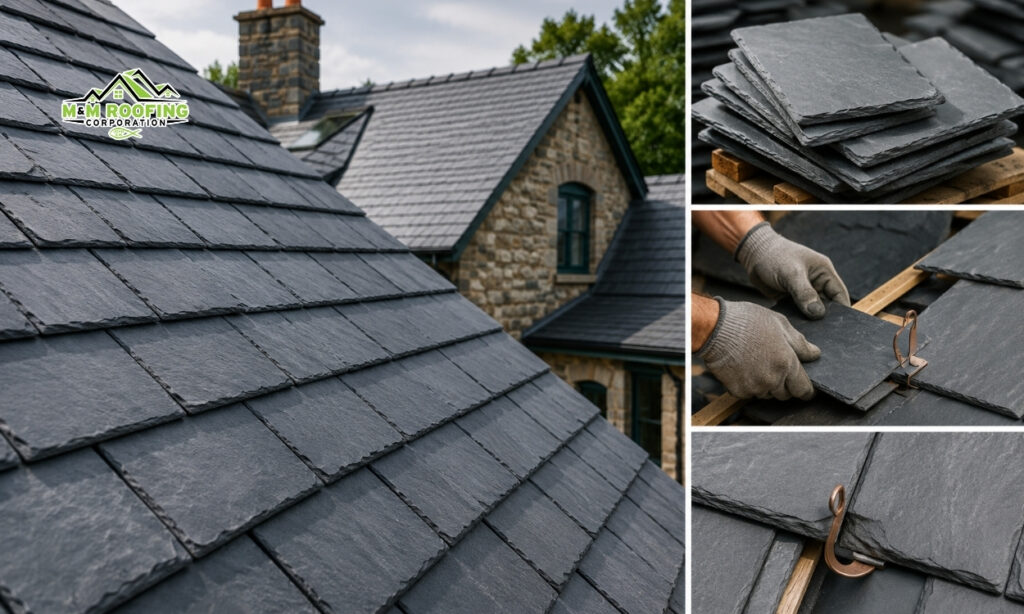
If you want to know how to tell how many layers of shingles you have, start with the roof edges. On many homes, the edges around the eaves, rake, or roof penetrations make the separate layers easier to spot. A trained roofer can often identify whether you have one layer or two without removing large sections.
Other ways to check roof layers include looking in the attic for nail penetration patterns, checking exposed transitions around flashing, and reviewing any paperwork from prior roofing work. Sometimes a roof looks like one clean surface from the street, but close inspection shows a second layer underneath.
Signs your roof may have more than one layer
- shingles look unusually thick at the edges
- roof lines appear uneven or bulky
- flashing details look raised or patched over
- the home has had multiple owners and no full replacement records
- there are signs of repeated repairs but no documented tear-off
If you are unsure, the safest move is to schedule a professional inspection before deciding between a layover and replacement. M&M Roofing offers residential roofing inspections and replacement guidance for homeowners who want a straight answer before spending money.
How many layers of roofing are allowed in practice?
One of the biggest questions homeowners ask is how many layers of roofing are allowed. For asphalt shingle homes, the practical answer is usually no more than two layers, and even that does not automatically mean a second layer is the best choice.
So, can you have 3 layers of roof shingles? In most normal residential situations, that is where the answer becomes a hard no. Once multiple applications are already on the house, a third layer creates too much weight and makes future issues harder to diagnose.
This is why homeowners comparing roof layover vs tear off should not think only about short-term savings. A layover can sometimes reduce upfront labour, but it also leaves old problems buried below the surface.
Can you put new shingles over old ones?
Yes, in some cases you technically can put new shingles over old ones. But that does not mean you always should.
A layover may be considered when there is only one existing layer, the deck is still sound, the shingles are lying relatively flat, and there are no major moisture or structural problems underneath. That is the best-case scenario.
A tear-off is often the better long-term choice when:
- the roof already has two layers
- the deck may be soft or damaged
- the roof has active leaks
- flashing details are failing
- the existing roof is uneven or curling badly
When people ask do I need a roof tear off, the honest answer is this: if the underlying roof is hiding damage, a layover only postpones the real repair.
Problems with two layers of shingles
The main problems with two layers of shingles are weight, trapped heat, uneven surfaces, and hidden deterioration. A second layer can also make leaks harder to trace because water may travel between materials before it shows up inside the house.
Two layers can also shorten the life of the new installation if the base underneath is already compromised. That is why maximum layers of roof shingles is not just a code issue. It is also a performance issue.
And if you eventually need replacement, the cost to remove multiple layers of roofing is higher because labour, disposal, and deck repair risks all go up.
Roof layers explained for New Jersey homeowners
For homeowners in Scotch Plains and surrounding parts of Union County, the smartest approach is usually to inspect first, decide second. Older New Jersey homes often have repairs layered over time, especially after storms, leaks, or quick resale work.
If your goal is to understand how to check roof layers before replacing the roof, do not rely on guesswork from the ground. Get a roofer to verify the existing system, explain whether building code maximum roof layers is an issue for your home, and show you whether roofing over existing shingles is worth considering at all.
A good roofing contractor should be able to tell you not only how many layers are there, but what that means for cost, lifespan, and the right next step.
The smartest next step before you reroof
If you have been asking how many layers of shingles are on my roof, you are already asking the right question. The answer affects everything that comes after: whether you can reroof, whether you should tear off, and whether your next roof will actually last.
For many homeowners, the best decision is not the cheapest short-term option. It is the one that gives you a clean, sound roof system with fewer surprises later. If you want expert help comparing replacement options, M&M Roofing’s residential roofing services in Scotch Plains and nearby NJ towns and their roofing materials resource page are both worth reviewing before you move forward.
Need help with your roof?
Reading a guide is helpful, but every home is different. Contact M&M Roofing Corp for roofing, gutters, siding or exterior service in New Jersey.