How to Repair Soffit: A Homeowner’s Guide to Fixing Roof Overhang Damage
How to Repair Soffit: A Homeowner’s Guide to Fixing Roof Overhang Damage explains how to spot soffit problems, handle small repairs, and know when professional help is needed. Learn what causes soffit damage and how to protect your roofline.
How to repair soffit starts with understanding what caused the damage in the first place: moisture, pests, poor ventilation, loose panels, or roof edge wear.
Soffit may look like a small detail under your roof overhang, but it plays an important role in protecting your home. It helps ventilate the attic, keeps pests out, supports the roofline, and gives the eaves a finished appearance. When it starts sagging, rotting, cracking, or pulling loose, the issue should not be ignored.
For homeowners in New Jersey, where rain, humidity, winter weather, and seasonal temperature swings can all affect exterior materials, fixing roof overhang damage early can prevent larger roof and fascia problems later. This guide explains how to fix roof soffit, when DIY soffit repair makes sense, and when professional soffit and fascia repair is the safer choice.
Signs of Soffit Damage Homeowners Should Not Ignore
Soffit damage is often easy to miss because it sits underneath the roof edge. Walk around your home and look up at the underside of the eaves. Common signs of soffit damage include:
- Peeling paint or discoloration
- Soft, swollen, or rotted wood
- Sagging sections
- Loose soffit panels
- Cracks, holes, or missing pieces
- Animal or insect activity
- Water stains near the fascia or gutters
- Poor attic ventilation or musty smells
If the damage is close to the gutters, fascia, or roof edge, it may be connected to clogged gutters, roof leaks, or improper drainage. In that case, patching the soffit alone may not solve the real problem.
For exterior roofline issues that may involve both soffit and fascia, M&M Roofing Corp can help with professional soffit and fascia repair in New Jersey.
What Causes Roof Overhang and Soffit Damage?
Before starting a repair, identify why the soffit failed. Otherwise, the same issue may come back.
The most common causes include water intrusion from damaged shingles, clogged gutters overflowing into the eaves, poor attic ventilation, old caulk, pest entry, and aging exterior materials. Rotted wood soffit repair is especially common when moisture has been trapped for a long time.
Vinyl and aluminum soffits usually resist rot, but they can still crack, dent, loosen, or separate from the channels that hold them in place. Wood soffit can look beautiful, but it needs more maintenance and is more vulnerable to moisture.
How to Repair Soffit Safely
Before any DIY soffit repair, make sure you can work safely. Soffit is usually above head height, which means ladders, tools, and overhead work are involved. If the area is high, unstable, near electrical components, or connected to roof damage, call a professional.
Step 1: Inspect the Damaged Area
Start by checking the full roof eaves repair area, not just the visible hole or loose panel. Look at the fascia board, gutter line, attic vents, and nearby shingles. If the fascia is soft or the gutter is pulling away, you may need more than a simple soffit repair.
Step 2: Remove the Damaged Material
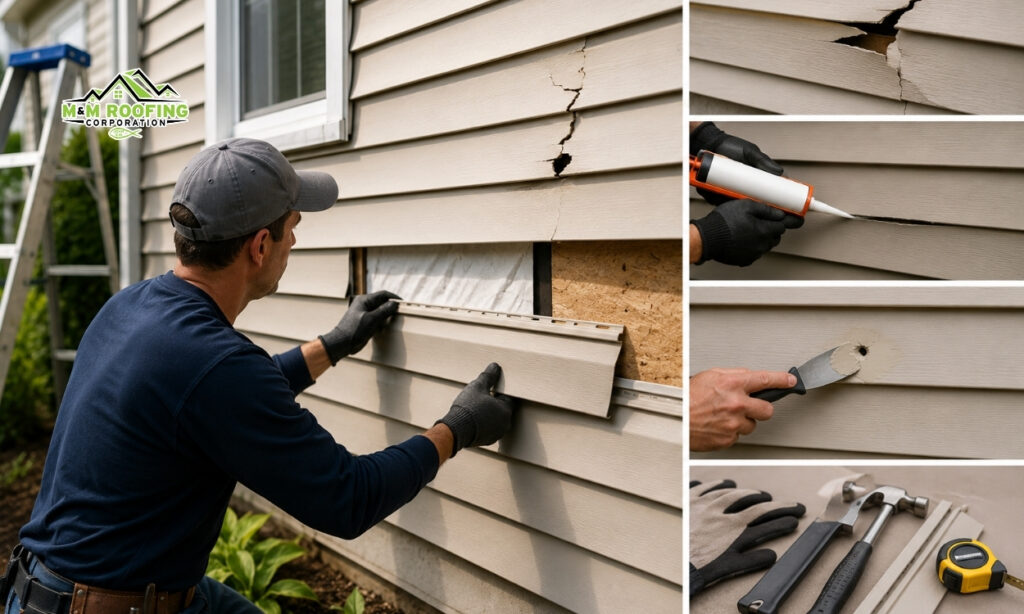
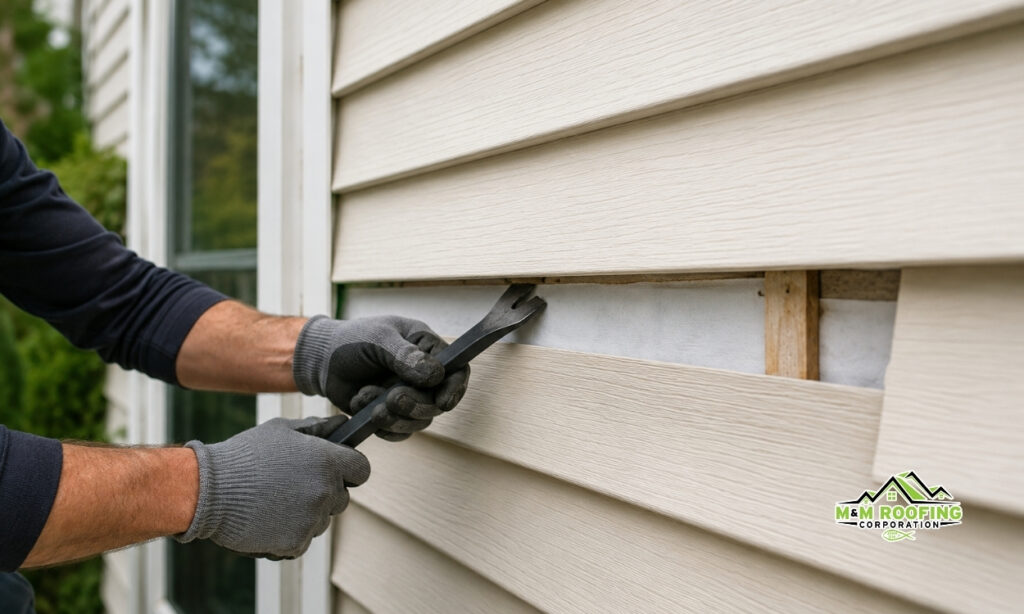
For wood soffit, cut out the rotted or damaged section carefully. Avoid cutting into framing or nearby trim. For vinyl soffit, unlock the damaged panel from the receiving channels and slide it out. For aluminum soffit repair, remove fasteners gently to avoid bending surrounding panels.
Step 3: Check for Moisture, Mold, or Pest Damage
Once the soffit is open, inspect the cavity. If there is wet insulation, mold-like staining, active leaks, or nesting material, stop and address the source. Repairing water damaged soffit without fixing the moisture problem is only temporary.
Step 4: Replace or Patch the Soffit
For small holes, you may be able to patch the area. Knowing how to patch a hole in soffit depends on the material. Wood can often be patched with a fitted piece and exterior-grade sealant. Vinyl panels are usually better replaced than patched. Aluminum can sometimes be patched, but a clean panel replacement often looks better.
If you are learning how to replace vinyl soffit panels, measure the damaged panel, match the style and ventilation pattern, cut the new panel to size, and secure it into the existing channels.
Step 5: Seal, Paint, and Finish
Wood repairs should be primed and painted with exterior-grade products. Gaps should be sealed where appropriate, but do not block ventilation openings. The goal is to keep water and pests out while allowing the attic to breathe.
Loose Soffit Repair: When Panels Are Not Damaged
Sometimes the soffit is not broken; it is simply loose. Wind, age, poor installation, or shifting trim can cause panels to rattle or sag. Loose soffit repair may involve re-securing channels, replacing fasteners, or resetting the panel.
Do not just nail through visible vinyl or aluminum panels unless the system is designed for it. Incorrect fastening can create buckling, cracking, or poor expansion movement.
Soffit Replacement vs Repair: Which Is Better?
Soffit replacement vs repair depends on the extent of damage. A small damaged section may be repairable. Widespread rot, repeated water damage, pest entry, or failing fascia usually points toward replacement.
Repair may be enough when:
- Only one or two panels are loose
- Damage is cosmetic
- The fascia and roof edge are solid
- There is no active leak
Replacement may be better when:
- Wood is rotted across multiple sections
- Ventilation is poor
- Water damage keeps returning
- Fascia boards are also failing
- Animals have entered through the soffit
If you are unsure, schedule an inspection through M&M Roofing Corp’s contact page before the issue spreads across the roofline.
How Much Does Soffit Repair Cost?
Soffit repair cost varies based on the material, height of the roofline, amount of damage, labor required, and whether fascia or gutter work is needed too. A small patch may be relatively simple, while repairing water damaged soffit with rotted fascia can cost more because the underlying structure needs attention.
Material matters as well. Rotted wood soffit repair may require cutting, carpentry, priming, and painting. Vinyl soffit panels can be easier to replace if matching material is available. Aluminum soffit repair may require careful handling to avoid visible dents or mismatched sections.
The best way to understand cost is to have the area inspected. A professional can tell whether you need a small repair, panel replacement, or full soffit and fascia repair.
When to Call a Professional for Soffit and Fascia Repair
DIY soffit repair is reasonable for small, accessible, cosmetic fixes. But call a professional if you see rot, recurring leaks, sagging gutters, pest entry, damaged fascia, or high rooflines.
Soffit connects to several important exterior systems. If the roof edge, gutters, fascia, and ventilation are not working together, the repair may not last. M&M Roofing Corp helps New Jersey homeowners with soffit and fascia services that protect the roofline and improve exterior performance.
Final Thoughts on How to Repair Soffit
Learning how to repair soffit can help you understand what is happening under your roof overhang, but the most important step is finding the cause of the damage. A loose panel, small hole, or rotted board may be a warning sign of water intrusion, ventilation problems, or aging exterior materials.
If the repair is minor and safe to reach, a careful homeowner may be able to handle it. If the damage involves rot, moisture, fascia, gutters, or repeated issues, it is better to get professional help. For reliable roofing and exterior service, visit M&M Roofing Corp or request an estimate for your soffit repair project.
Need help with your roof?
Reading a guide is helpful, but every home is different. Contact M&M Roofing Corp for roofing, gutters, siding or exterior service in New Jersey.