How to Replace Roof Shingles in New Jersey
How to replace roof shingles in New Jersey starts with understanding safety, local permit rules, weather exposure, and whether the roof needs a simple re-shingle or a full replacement. If you are researching how to replace roof shingles in New Jersey, you are probably dealing with one of two situations: a roof that is clearly […]
How to replace roof shingles in New Jersey starts with understanding safety, local permit rules, weather exposure, and whether the roof needs a simple re-shingle or a full replacement.
If you are researching how to replace roof shingles in New Jersey, you are probably dealing with one of two situations: a roof that is clearly wearing out, or a few missing shingles that have turned into a bigger concern after wind, rain, or winter ice. In New Jersey, shingle work is not just about nailing down new materials. You also need to think about cold-weather performance, flashing details, roof decking condition, and whether DIY makes sense at all.
For many homeowners, the smartest next step is to compare the process with a professional roof replacement service in New Jersey before committing to the job.
When roof shingle replacement in NJ makes more sense than a small repair
Not every roof needs a full tear-off. But roof shingle replacement NJ projects usually make more sense when the shingles are curling, cracking, losing granules, or blowing off in multiple sections. You may also be overdue if the roof has repeated leaks, visible sagging, or mismatched patch repairs across several slopes.
A proper NJ roof replacement guide always starts with diagnosis. Before new shingles go on, you need to know whether the issue is only surface wear or whether water has already reached the sheathing below.
How to tell if roof decking is rotted
One of the biggest mistakes in DIY roof replacement New Jersey jobs is covering damaged decking instead of fixing it. Warning signs include soft spots underfoot, dark staining in the attic, a musty smell, sagging roof lines, or plywood that looks crumbly around old leaks. If the decking is compromised, replacing shingles alone will not solve the problem.
Do I need a permit to replace my roof in NJ?
This is one of the most common questions homeowners ask. In New Jersey, permit rules can depend on the exact scope of work. On many detached one- and two-family homes, replacing roof covering materials alone may not require a permit, but replacing sheathing, doing structural work, or working on townhouses and condos can change that. Because local enforcement can vary, it is smart to confirm the job scope with the municipality before work begins.
That is one reason many homeowners prefer an experienced New Jersey roof replacement contractor who already understands the local process.
Step by step architectural shingle installation for New Jersey homes
If you want the basic process, this is what a step by step architectural shingle installation job typically looks like.
1. Protect the property and tear off the old roof
Start by protecting landscaping, siding, windows, and driveways. Then remove the old shingles, underlayment, nails, and damaged flashing. If you are researching how to tear off old roof shingles safely, remember this is one of the riskiest parts of the project because footing becomes unstable fast once the old surface is disturbed.
2. Inspect the decking and replace damaged sections
Once the roof is stripped, inspect all sheathing carefully. This is where hidden leaks, rot, and nail fatigue show up. Any weak or rotted wood should be replaced before the roof assembly is rebuilt.
3. Install drip edge and underlayment correctly
A strong New Jersey roof is not just about shingles. It begins underneath them. In colder parts of the region, proper eave protection matters.
4. How to install ice and water shield on roof
For New Jersey winters, this layer is critical. Ice and water shield should be installed along eaves, in vulnerable valleys, and around penetrations where melting snow and wind-driven rain can back up under shingles. This step is essential for preventing ice dams new roof NJ problems and for improving long-term leak resistance.
5. Lay starter shingles and field shingles
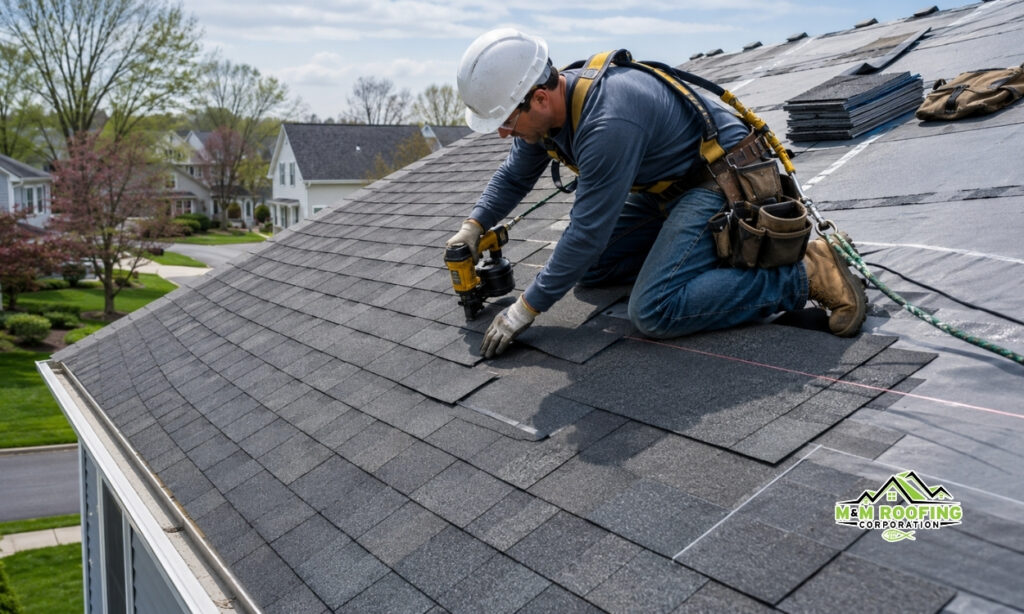
Starter strips go first along the eaves and rakes. After that, architectural shingles are installed course by course with the correct offset, nailing pattern, and exposure. Precision matters here. Bad alignment, overdriven nails, or rushed placement can shorten the life of the whole system.
6. Finish flashings, ridge caps, and ventilation
Chimneys, pipe boots, valleys, and wall intersections must be flashed correctly. Ridge caps and attic ventilation should also be reviewed before the job is finished, because airflow affects shingle life, moisture control, and winter performance.
Best temperature to install roof shingles in NJ
Temperature matters more than many homeowners realise. Shingles become harder to handle in cold weather, and sealant strips may not bond as intended if installation is rushed in low temperatures. That is why timing, storage, and handling are part of every serious NJ roof replacement guide.
Best roof shingles for New Jersey weather
The best roof shingles for New Jersey weather are usually high-quality architectural asphalt shingles with strong wind ratings, reliable manufacturer backing, and good performance in freeze-thaw conditions. For homes closer to the shoreline, wind resistant shingles for NJ coast properties are especially important because gust exposure is higher and fastening details matter even more.
If you are weighing materials, expected lifespan, and the cost to replace roof shingles in NJ 2026, getting a local assessment is usually more useful than relying on national averages. A detailed roof replacement estimate in NJ can account for tear-off, decking repairs, ventilation, and shingle type.
DIY roofing vs hiring a contractor in NJ
DIY roofing vs hiring a contractor in NJ usually comes down to risk, not just labour cost. Replacing a few exposed shingles after a minor wind event is very different from tearing off and rebuilding an ageing roof system. Full replacement means working at height, managing flashing details, checking decking, and making sure the installation is suitable for New Jersey weather.
If the roof is steep, older, leaking in multiple places, or showing structural warning signs, a professional approach is usually the safer and more cost-effective choice.
Final thoughts on how to replace roof shingles in New Jersey
A successful roof shingle replacement NJ project depends on more than shingles alone. You need a sound deck, proper underlayment, cold-climate protection, correct installation sequencing, and clear judgment about whether the roof is a real DIY candidate. For most homeowners, the goal is not just getting new shingles on the roof. It is getting a roof system that holds up through wind, rain, snow, and the seasonal swings New Jersey homes deal with every year.
If you want clarity before making a decision, speak with a team that handles roof replacement in New Jersey for ageing or damaged shingle roofs.
Need help with your roof?
Reading a guide is helpful, but every home is different. Contact M&M Roofing Corp for roofing, gutters, siding or exterior service in New Jersey.